A summer of conversations about listening, relationships and the future of fundraising
There is a paradox at the heart of modern philanthropy: we have more data, technology and sophisticated fundraising tools than ever, yet one of the most powerful tools remains remarkably simple:
Listen.
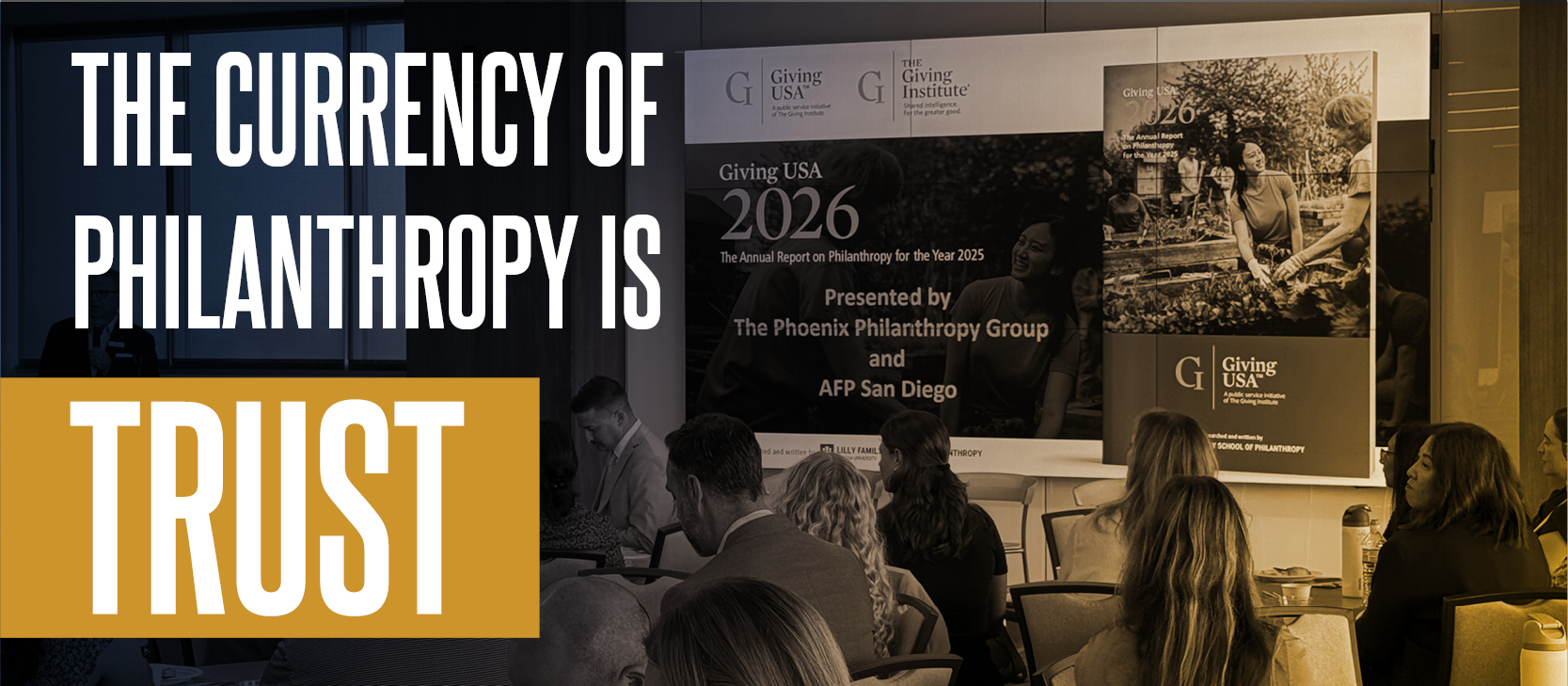
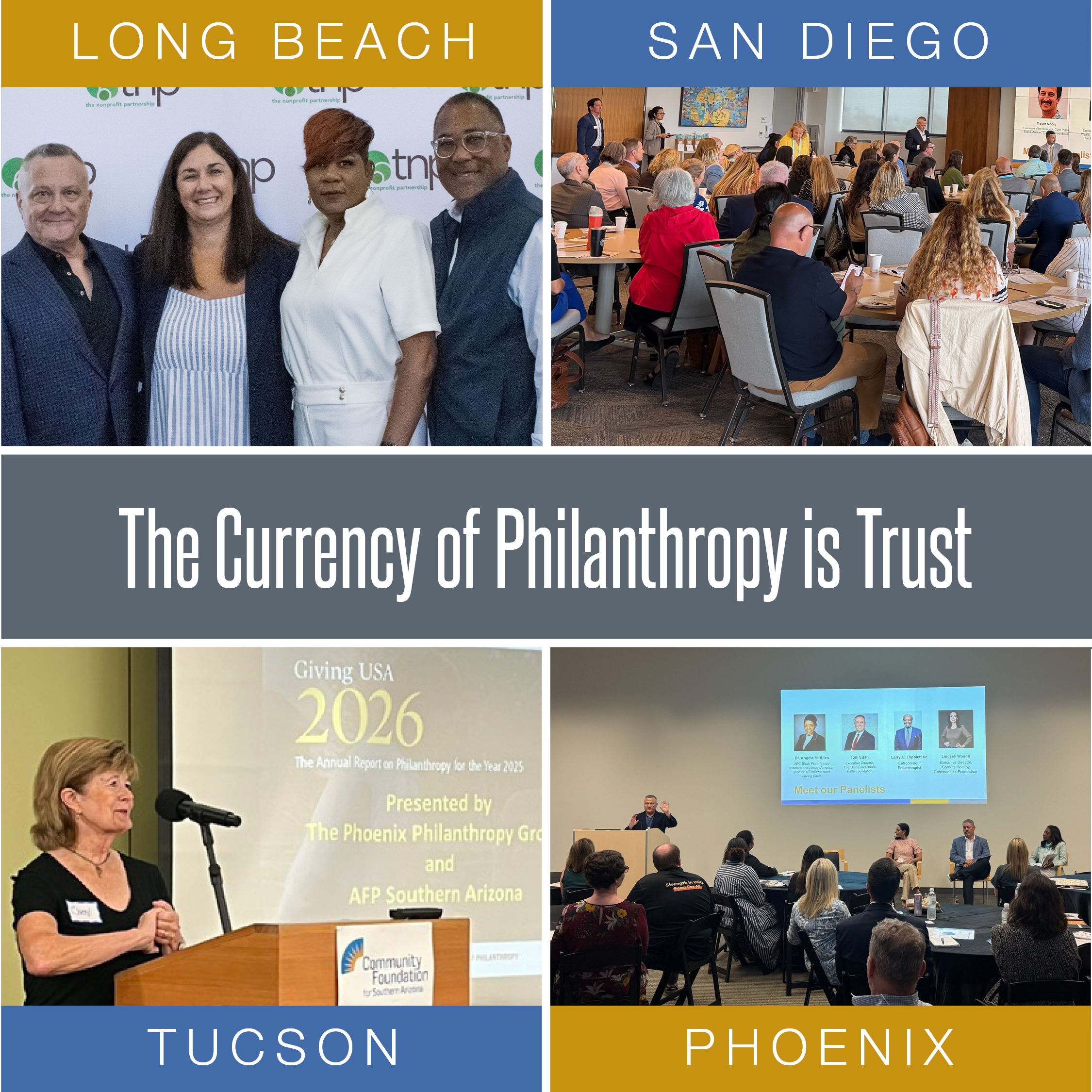
This summer, Phoenix Philanthropy explored that idea across Arizona and Southern California, presenting Giving USA 2026, the Annual Report on Philanthropy in 2025, in Phoenix, Tucson, San Diego and Long Beach, and bringing the conversation to the San Diego Fundraising Conference.
The Giving USA data offers an essential picture of charitable giving in America, who is giving, how much is being given, and how philanthropy is changing. But behind every statistic is a human decision.
A donor decides that an organization is worthy of confidence. A family chooses a cause that reflects its values. A philanthropist decides whether the people entrusted with a mission will turn generosity into meaningful impact.
That is where the numbers end and the relationship begins.
From transactions to relationships
Today’s donors expect more than a compelling case for support. They expect transparency, authenticity, responsiveness and evidence of impact. They want to be heard. And when organizations face uncertainty, whether a leadership transition, strategic shift or crisis, they expect communication that is candid, timely and human. Donors aren’t simply evaluating an organization’s mission. They are evaluating the relationship.
That was the premise of our San Diego Fundraising Conference session, Philanthropy Moves at the Speed of Trust.
Trust isn’t created by a perfectly executed solicitation. It is built over time through small interactions: a thoughtful conversation, a timely response, an honest answer, a promise kept.
And trust can be eroded just as quickly and quietly, through silence, missed commitments or communication that feels scripted rather than genuine.
The lesson is simple: Stewardship isn’t what happens after the gift. Stewardship is the relationship that makes the gift possible.
Our second session at the San Diego Fundraising Conference, Listening Your Way to a $40 Million Gift, explored the power of listening in transformational philanthropy.
Transformational gifts rarely begin with a number. They begin with understanding what a donor cares about, what experiences shaped their philanthropy, what they hope to accomplish and what they need to believe before making an extraordinary commitment.
Those answers aren’t found in a database. They emerge through conversation.
Sometimes the most important fundraising work happens when there is no ask, when a fundraiser is curious enough to listen and disciplined enough to let the donor’s aspirations lead.
From Giving USA conversations to discussions about trust and transformational giving, one theme connected the summer: philanthropy is ultimately about people.
The future of philanthropy won’t be determined solely by the largest database or most sophisticated analytics. It will belong to organizations that understand that people give when they believe in the mission, in the possibility of impact, and people asking them to join them. That belief is built through relationships. Relationships are built through listening. And listening builds trust.
Philanthropy moves at the speed of trust.