

Welcome to the September 2026 issue of The Phoenix Philanthropy Group’s “Presidents Corner” e-newsletter. This month’s topic, “What 23 University Presidents Around the World Taught Me About Transformational Leadership,” highlights findings Dr. Devorah Lieberman’s forthcoming book, Guided by Principle, Driven by Change: Insights on Transformative Leadership from University Presidents Globally, published by Bloomsbury Academic as part of the American Council on Education Leadership Series.
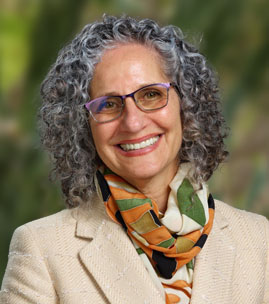
Dr. Devorah Lieberman, Senior Consultant for The Phoenix Philanthropy Group, was the first female president (serving 2011-2023) of the 135-year-old University of La Verne, a private not-for-profit university in Southern California. Under Devorah’s visionary leadership, the University of La Verne was designated as a Hispanic/Minority Serving Institution, the endowment quadrupled from $36 million to $151 million, nearly $175 million was raised, and over $30 million was secured in corporate, foundation, and government funding. Dr. Lieberman is also senior advisor to the President of the American Council on Education, Consultant to the International Association of University Presidents, President in Residence, Harvard University, and, Workforce Initiative Lead for the LA Area Chamber of Commerce.
As we begin the 2026–27 academic year, college and university presidents face one of the most challenging leadership environments in recent history. Financial pressures, demographic shifts, artificial intelligence, political polarization, changing public expectations, skepticism of formal education, and renewed scrutiny of higher education require leaders to make difficult decisions while remaining steadfast and committed to their institutions’ missions.
These realities raise important questions for every university president:
- How do I lead transformational change without losing sight of institutional purpose?
- How do I navigate uncertainty while inspiring confidence?
- What distinguishes leaders who successfully guide their institutions through periods of profound change?
Those questions inspired my newest book, Guided by Principle, Driven by Change: Insights on Transformative Leadership from University Presidents Globally, to be published by Bloomsbury Academic on August 6 as part of the American Council on Education’s Series.
The book began with a deceptively simple research question:
What distinguishes truly transformative presidential leadership in an era of unprecedented change?
That question ultimately became a comparative qualitative study of 23 university presidents from around the world, revealing not only the leadership principles they shared, but also the distinct lived experiences that shaped how they led and the choices they made.
Key Leadership Insights
This research comparing 23 university presidents from around the world revealed five overarching insights:
- Leadership principles are remarkably consistent across cultures and institutions. Regardless of geography or institutional type, the most successful presidents grounded their leadership in purpose, integrity, courage, resilience, and service.
- Transformational leadership is fundamentally relational. Lasting institutional change depends upon building trust through collaboration with faculty, students, governing boards, alumni, governments, donors, industry partners, and local communities.
- Today’s leadership challenges are increasingly global. Presidents across continents identified many of the same issues, including artificial intelligence, enrollment shifts, financial sustainability, workforce preparation, political polarization, and restoring public confidence in higher education.
- The pathways to leadership are not the same for everyone. While the core principles of effective leadership were shared, female and male presidents often described different journeys to the presidency, distinct leadership experiences, and different perceptions of mentorship, credibility, and advancement.
- Understanding both the commonalities and the differences makes us better leaders. Examining where leadership experiences converge, and where they diverge, provides a richer understanding of transformational leadership and offers valuable guidance for current and aspiring university presidents.
Looking Beyond Leadership Theory
There is no shortage of books about higher education leadership. Biographies, memoirs, governance studies, and leadership models have all contributed to our understanding of the university presidency. Far less common are studies that compare the lived experiences of university presidents across countries, cultures, institutional types, and gender. That gap inspired this research.
The study examined the leadership experiences of 23 university presidents, ten women featured in Spotlighting Female Presidential Leadership and thirteen men featured in Guided by Principle, Driven by Change. All participants are members of the International Association of University Presidents (IAUP), representing public and private universities, research-intensive and teaching-focused institutions, government-funded and independent institutions, and universities serving urban and rural communities across multiple continents.
Each president reflected on the same questions regarding their leadership journey, philosophy, decision-making, challenges, advice for future leaders, and lessons learned. This created a unique opportunity to examine not only what exceptional leaders share, but also how leadership experiences differ across gender and institutional context.
What All 23 Presidents Had in Common
Despite serving remarkably different institutions and national systems, several themes consistently emerged.
The presidents viewed being purpose-driven as the foundation of effective leadership. Their decisions were guided not simply by strategy, but by an unwavering commitment to institutional mission and student success.
They described transformational leadership as requiring courage, the willingness to make difficult decisions, embrace change, and challenge long-held assumptions while remaining grounded in enduring values.
They emphasized that relationships drive institutional success. Faculty, students, governing boards, alumni, donors, governments, industry partners, and local communities all play critical roles in advancing institutional goals.
Every president also demonstrated extraordinary resilience. Whether confronting financial pressures, demographic change, political scrutiny, technological disruption, or global crises, they consistently described leadership as an ongoing process of learning, adapting, and persevering.
Perhaps most importantly, the research demonstrated that effective presidential leadership transcends geography and most cultures. Although higher education systems differ dramatically around the world, today’s leaders are wrestling with remarkably similar challenges—and can learn a great deal from one another.
Where Their Leadership Journeys Diverged
While the study revealed remarkable consistency in the principles of effective leadership, it also identified meaningful differences in the lived experiences of female and male university presidents.
Several themes consistently distinguished the two groups:
- Pathways to the presidency. Female presidents more frequently described leadership journeys shaped by mentorship, sponsorship, and overcoming structural barriers, while male presidents more often viewed their progression as a natural extension of prior leadership opportunities.
- Leadership language. Women more frequently emphasized collaboration, belonging, inclusion, and shared success. Men more often described leadership through institutional vision, strategic direction, and organizational transformation.
- “We” versus “I.” Female presidents tended to frame accomplishments collectively, highlighting the contributions of their teams and communities. Male presidents were more likely to describe leadership through their own decision-making and executive responsibilities.
- Imposter syndrome. Women openly discussed self-doubt, proving themselves, working harder than others, and navigating expectations associated with being among relatively few female presidents. These themes appeared far less frequently among the male presidents.
- Earned versus expected advancement. Female presidents often described feeling that credibility had to be continually earned throughout their careers, whereas male presidents more commonly viewed advancement as recognition of accumulated leadership experience.
- Mentorship and opportunity creation. Although mentorship benefited all leaders, women more frequently identified mentors and advocates as pivotal in opening doors and encouraging them to pursue presidential leadership where the male presidents spoke about their responsibilities to mentor others but not necessarily be mentored themselves.
These differences do not suggest that one leadership approach is more effective than another. Rather, they illustrate how leadership is shaped by lived experience, career pathways, organizational culture, and societal expectations. Recognizing both the commonalities and the differences provides a richer, more nuanced understanding of transformational leadership—and broadens the lens through which we prepare and support the next generation of university presidents.
Why This Research Matters
Higher education stands at one of the most consequential moments in its history. Institutions are navigating technological disruption, changing demographics, workforce demands, financial uncertainty, and evolving public expectations.
These challenges require more than effective management.
They require principled leadership.
The title of my new book, Guided by Principle, Driven by Change, reflects the central lesson that emerged from studying these 23 presidents. The most successful leaders did not resist change, nor did they pursue change simply for the sake of change Instead, they embraced innovation while remaining firmly anchored in enduring values. Their principles informed their decisions, strengthened relationships, inspired their communities, and shaped the cultures of their institutions.
At the same time, this research reminds us that while the principles of exceptional leadership may be remarkably consistent, the journeys to leadership are not. The differences that emerged between the female and male presidents—their pathways to the presidency, leadership language, perceptions of imposter syndrome, approaches to mentorship, and experiences of earning credibility—offer important insights into how leadership is shaped by lived experience.
Understanding both what unites leaders and what distinguishes their experiences enables us to develop more inclusive, thoughtful, and effective leadership for the future of higher education.
My desire is that Guided by Principle, Driven by Change encourages current and aspiring higher education leaders to reflect on their own leadership journeys, recognize both their strengths and opportunities for growth, and lead with greater confidence, wisdom, and purpose.
As I completed this research, I found myself returning to one question that extends well beyond the presidency. It is a question for anyone entrusted with leadership, regardless of role or institution:
What leadership principles are guiding your decisions today—and which experiences have shaped the leader you have become?
The twenty-three presidents featured in this research answered that question in different ways, shaped by their cultures, institutions, and personal journeys. Yet together they demonstrate that transformational leadership is strengthened when we value both the enduring principles that unite effective leaders and the diverse experiences that shape how they lead.
Their stories should inspire you to reflect on your own leadership journey, and on the legacy you wish to leave.
Learn More
If these leadership insights resonate with you, I invite you to learn more about the research and the remarkable university presidents whose experiences informed this study.
- Guided by Principle, Driven by Change: Insights on Transformative Leadership from University Presidents Globally (Bloomsbury Academic)
Available August 6, 2026.
Book information: https://www.bloomsbury.com/us/guided-by-principle-driven-by-change-9798216383031/ - SPOTLIGHTING FEMALE LEADERSHIP: STRATEGIES, STORIES, PERSPECTIVES
Book Information: https://iaup.org/spotlighting-female-leadership-strategies-stories-perspectives-iaup/ - International Association of University Presidents (IAUP)
Learn more about the global membership organization created exclusively for university presidents and the organization whose members participated in this research.
Website: http://www.iaup.org
About the Author
Devorah Lieberman, PhD, is a senior consultant at The Phoenix Philanthropy Group, President Emerita of the University of La Verne, Harvard President in Residence, Senior Advisor to the President of the American Council on Education, Consultant-International Association of University Presidents, and Executive Leadership Coach.
For more about Devorah please see https://phoenixphilanthropy.com/about/bios/